
Palabras clave
bulimia nerviosa
trastorno por atracón
neuropsicología
neuroimagen
Cómo citar
Resumen
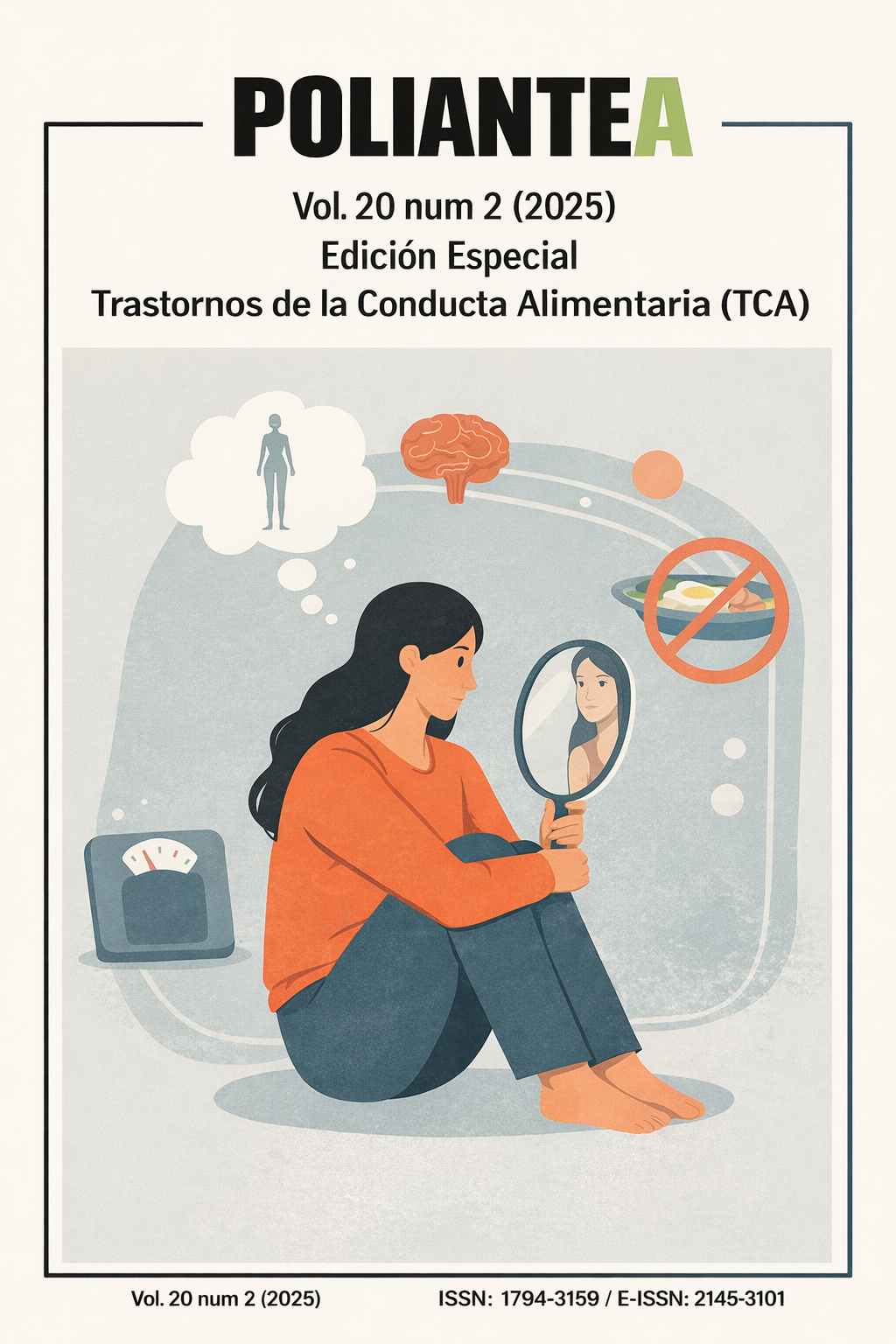
Los Trastornos de la Conducta Alimentaria (TCA), incluyendo anorexia nerviosa, bulimia nerviosa y trastorno por atracón, representan patologías de creciente prevalencia con importantes alteraciones neurobiológicas. Esta revisión sintetiza hallazgos de neuroimagen y perfiles neurocognitivos asociados a estos trastornos. Los estudios funcionales y estructurales evidencian alteraciones en regiones como corteza orbitofrontal, ínsula, amígdala, hipocampo y estructuras frontales, con patrones específicos según el trastorno. El perfil neurocognitivo revela déficits predominantes en flexibilidad cognitiva, coherencia central, control inhibitorio, toma de decisiones y funciones ejecutivas. La Terapia de Remediación Cognitiva emerge como intervención neuropsicológica específica, fundamentada en la neuroplasticidad y orientada a restaurar las funciones cognitivas afectadas. La alta comorbilidad psiquiátrica y médica, junto con la complejidad neuropsicológica, subrayan la necesidad de abordajes multidisciplinarios integrados desde el inicio del tratamiento para mejorar el pronóstico de estos pacientes.
Referencias
American Psychiatric Association. (2022). DSM-5-TR: Manual diagnóstico y estadístico de los trastornos mentales (5.ª ed., texto revisado). Editorial Médica Panamericana. https://www.medicapanamericana.com/es-CO/libros/dsm-5-trr-manual-diagnostico-y-estadistico-de-los-trastornos-mentales-texto-revisado-5a-edicion
Arija-Val, V., Santi-Cano, M. J., Novalbos-Ruiz, J. P., Canals, J., & Rodríguez-Martín, A. (2022). Caracterización, epidemiología y tendencias de los trastornos de la conducta alimentaria. Nutrición Hospitalaria, 39(SPE2), 8–15. https://doi.org/10.20960/nh.04173
Barker, J., & Oldman, L. (2021). Eating disorders. In Child and adolescent mental health: Theory and practice (3rd ed.). CRC Press.
Bracho P., M. J., Grasso-Cladera, A., & Salas R., C. (2022). Déficits neuropsicológicos en mujeres con trastornos de la conducta alimentaria. Revista Chilena de Neuro-Psiquiatría, 60(1), 40–50. https://doi.org/10.4067/s0717-92272022000100040
Brockmeyer, T., Febry, H., Leiteritz-Rausch, A., Wünsch-Leiteritz, W., Leiteritz, A., & Friederich, H.-C. (2022). Cognitive flexibility, central coherence, and quality of life in anorexia nervosa. Journal of Eating Disorders, 10(1), Article 22. https://doi.org/10.1186/s40337-022-00547-4
Broomfield, C., Stedal, K., & Touyz, S. (2021). The neuropsychological profile of severe and enduring anorexia nervosa: A systematic review. Frontiers in Psychology, 12, Article 708536. https://doi.org/10.3389/fpsyg.2021.708536
Buyukceran, O. C., Yurumez, E., Colak, B., Gunaydin, M., & Oncu, B. (2025). Exploration of cognitive flexibility and emotion recognition in adolescents with eating disorders. Journal of the International Neuropsychological Society. Advance online publication, 1–9. https://doi.org/10.1017/S1355617725000025
Celeghin, A., Palermo, S., Giampaolo, R., Di Fini, G., Gandino, G., & Civilotti, C. (2023). Brain correlates of eating disorders in response to food visual stimuli: A systematic narrative review of fMRI studies. Brain Sciences, 13(3), Article 465. https://doi.org/10.3390/brainsci13030465
Chen, X., Ai, C., Liu, Z., & Wang, G. (2024). Neuroimaging studies of resting-state functional magnetic resonance imaging in eating disorders. BMC Medical Imaging, 24(1), Article 265. https://doi.org/10.1186/s12880-024-01432-z
Cicerone, K. D., Dahlberg, C., Malec, J. F., Langenbahn, D. M., Felicetti, T., Kneipp, S., Ellmo, W., Kalmar, K., Giacino, J. T., Harley, J. P., Laatsch, L., Morse, P. A., & Catanese, J. (2005). Evidence-based cognitive rehabilitation: Updated review of the literature from 1998 through 2002. Archives of Physical Medicine and Rehabilitation, 86(8), 1681–1692. https://doi.org/10.1016/j.apmr.2005.03.024
Devoto, F., Coricelli, C., Paulesu, E., & Zapparoli, L. (2022). Neural circuits mediating food cue-reactivity: Toward a new model shaping the interplay of internal and external factors. Frontiers in Nutrition, 9, Article 954523. https://doi.org/10.3389/fnut.2022.954523
Díaz-Marsá, M., Pemau, A., de la Torre-Luque, A., Vaz-Leal, F., Rojo-Moreno, L., Beato-Fernández, L., Graell, M., Carrasco-Díaz, A., & Carrasco, J. L. (2023). Executive dysfunction in eating disorders: Relationship with clinical features. Progress in Neuro-Psychopharmacology and Biological Psychiatry, 120, Article 110649. https://doi.org/10.1016/j.pnpbp.2022.110649
Eichen, D. M., Matheson, B. E., Appleton-Knapp, S. L., & Boutelle, K. N. (2017). Neurocognitive treatments for eating disorders and obesity. Current Psychiatry Reports, 19(9), Article 62. https://doi.org/10.1007/s11920-017-0813-7
Eichen, D. M., Strong, D. R., Twamley, E. W., & Boutelle, K. N. (2023). Adding executive function training to cognitive behavioral therapy for binge eating disorder: A pilot randomized controlled trial. Eating Behaviors, 51, Article 101806. https://doi.org/10.1016/j.eatbeh.2023.101806
Filipponi, C., Visentini, C., Filippini, T., Cutino, A., Ferri, P., Rovesti, S., Latella, E., & Di Lorenzo, R. (2022). The follow-up of eating disorders from adolescence to early adulthood: A systematic review. International Journal of Environmental Research and Public Health, 19(23), Article 16237. https://doi.org/10.3390/ijerph192316237
Goldschmidt, A. B., Jeong, K., Yu, L., Egbert, A. H., Schmidt, R., & Hilbert, A. (2025). Executive functioning and treatment outcome among adolescents undergoing cognitive-behavioral therapy for binge-eating disorder. Journal of Child Psychology and Psychiatry, 66(1), 64–74. https://doi.org/10.1111/jcpp.14031
Grant, J. E., & Chamberlain, S. R. (2020). Neurocognitive findings in young adults with binge eating disorder. International Journal of Psychiatry in Clinical Practice, 24(1), 71–76. https://doi.org/10.1080/13651501.2019.1687724
Halligan, P. W., & Wade, D. T. (Eds.). (2005). The effectiveness of rehabilitation for cognitive deficits. Oxford University Press.
Hamady-Saad, H., & Engel-Yeger, B. (2025). A systematic review on executive functions in female adolescents with eating disorders: Implications on daily life and relevance to rehabilitation. Journal of Child and Adolescent Mental Health. Advance online publication. https://doi.org/10.2989/17280583.2024.2438367
Hambleton, A., Pepin, G., Le, A., Maloney, D., National Eating Disorder Research Consortium, Touyz, S., & Maguire, S. (2022). Psychiatric and medical comorbidities of eating disorders: Findings from a rapid review of the literature. Journal of Eating Disorders, 10(1), Article 132. https://doi.org/10.1186/s40337-022-00654-2
Hernández, J. A. F., Arévalo, R. V., Paredes, K. F., Guzmán-Saldaña, R. M. E., Díaz, J. M. M., & Telles, F. S. (2025). Cognitive remediation therapy in eating disorders: A systematic review: Terapia de remediación cognitiva en trastornos alimentarios: una revisión sistemática. LATAM Revista Latinoamericana de Ciencias Sociales y Humanidades, 6(2), 2250–2273. https://doi.org/10.56712/latam.v6i2.3766
Idini, E., Márquez-Medina, D., Pifarré-Paredero, J., Buj-Álvarez, I., & Castán-Campanera, E. (2012). ¿Son las alteraciones neuropsicológicas de los trastornos de la conducta alimentaria endofenotipos de la enfermedad? Revisión y estado actual del tema. Revista de Neurología, 55(12), 729–736. https://doi.org/10.33588/rn.5512.2012366
Juarascio, A. S., Manasse, S. M., Espel, H. M., Kerrigan, S. G., & Forman, E. M. (2015). Could training executive function improve treatment outcomes for eating disorders? Appetite, 90, 187–193. https://doi.org/10.1016/j.appet.2015.03.013
Keegan, E., Byrne, S., Hay, P., Touyz, S., Treasure, J., Schmidt, U., McIntosh, V. V. W., & Wade, T. D. (2022). An exploratory examination of executive functioning as an outcome, moderator, and predictor in outpatient treatment for adults with anorexia nervosa. Journal of Eating Disorders, 10(1), Article 83. https://doi.org/10.1186/s40337-022-00602-0
Khelifa, M. S., Skov, L. J., & Holst, B. (2021). Biased ghrelin receptor signaling and the dopaminergic system as potential targets for metabolic and psychological symptoms of anorexia nervosa. Frontiers in Endocrinology, 12, Article 734547. https://doi.org/10.3389/fendo.2021.734547
Krug, I., Dang, A. B., Lu, E., Ooi, W. L., Portingale, J., & Miles, S. (2024). A narrative review on the neurocognitive profiles in eating disorders and higher weight individuals: Insights for targeted interventions. Nutrients, 16(24), Article 4418. https://doi.org/10.3390/nu16244418
Lasprilla, J. C. A. (2006). Rehabilitación neuropsicológica. El Manual Moderno.
Lasprilla, J. C. A., Wilson, B. A., & Landa, L. O. (2020). Principios de rehabilitación neuropsicológica. El Manual Moderno. https://dialnet.unirioja.es/servlet/libro?codigo=824753
Leppanen, J., Adamson, J., & Tchanturia, K. (2018). Impact of cognitive remediation therapy on neurocognitive processing in anorexia nervosa. Frontiers in Psychiatry, 9, Article 96. https://doi.org/10.3389/fpsyt.2018.00096
Lezak, M. D. (1982). The problem of assessing executive functions. International Journal of Psychology, 17(1–4), 281–297. https://doi.org/10.1080/00207598208247445
Lucas, I., Miranda-Olivos, R., Testa, G., Granero, R., Sánchez, I., Sánchez-González, J., Jiménez-Murcia, S., & Fernández-Aranda, F. (2021). Neuropsychological learning deficits as predictors of treatment outcome in patients with eating disorders. Nutrients, 13(7), Article 2145. https://doi.org/10.3390/nu13072145
Maldonado-Ferrete, R., Catalán-Camacho, M., Valbuena, V. Á., & Jáuregui-Lobera, I. (2020). Funcionamiento neuropsicológico en los trastornos de la conducta alimentaria: Un estudio comparativo. Journal of Negative and No Positive Results, 5(5), 504–534. https://doi.org/10.19230/jonnpr.3398
Miles, S., Phillipou, A., Sumner, P., & Nedeljkovic, M. (2022). Cognitive flexibility and the risk of anorexia nervosa: An investigation using self-report and neurocognitive assessments. Journal of Psychiatric Research, 151, 531–538. https://doi.org/10.1016/j.jpsychires.2022.05.043
Momen, N. C., Plana-Ripoll, O., Yilmaz, Z., Thornton, L. M., McGrath, J. J., Bulik, C. M., & Petersen, L. V. (2022). Comorbidity between eating disorders and psychiatric disorders. International Journal of Eating Disorders, 55(4), 505–517. https://doi.org/10.1002/eat.23687
Morales López, M. J. (2019). Anorexia nerviosa en población pediátrica. Medicina Legal de Costa Rica, 36(2), 46–55.
Noon, R., & Pathan, T. (2025). A systematic review to explore a neuropsychological profile that predates anorexia nervosa. Archives of Clinical Neuropsychology, 40(2), 330–344. https://doi.org/10.1093/arclin/acae072
Ojeda-Martín, Á., López-Morales, M. del P., Jáuregui-Lobera, I., & Herrero-Martín, G. (2021). Uso de redes sociales y riesgo de padecer TCA en jóvenes. Journal of Negative and No Positive Results, 6(10), 1289–1307. https://doi.org/10.19230/jonnpr.4322
Pappaianni, E., Barona, M., Doucet, G. E., Clark, C., Frangou, S., & Micali, N. (2023). Neurocognitive endophenotypes for eating disorders: A preliminary high-risk family study. Brain Sciences, 13(1), Article 99. https://doi.org/10.3390/brainsci13010099
Pappaianni, E., Borsarini, B., Berchio, C., Aicoboaie, S., Konstantopoulou, S. V., Van de Ville, D., & Micali, N. (2025). Neurobiology and cognition in girls at high-risk of eating disorders: Exploring imaging-derived trait markers. European Eating Disorders Review, 33(5), 1032–1043. https://doi.org/10.1002/erv.3203
Perpiñá, C., Segura, M., & Sánchez-Reales, S. (2017). Cognitive flexibility and decision-making in eating disorders and obesity. Eating and Weight Disorders, 22(3), 435–444. https://doi.org/10.1007/s40519-016-0331-3
Ponsford, J., Sloan, S., & Snow, P. (1995). Traumatic brain injury: Rehabilitation for everyday adaptive living. Lawrence Erlbaum Associates.
Sádaba, C. (2024). Redes sociales, adolescencia y trastornos de la conducta alimentaria: La necesidad de una mirada comprehensiva. Anales del Sistema Sanitario de Navarra, 47(1), e1075. https://doi.org/10.23938/ASSN.1075
Smith, K. E., Mason, T. B., Johnson, J. S., Lavender, J. M., & Wonderlich, S. A. (2018). A systematic review of reviews of neurocognitive functioning in eating disorders: The state-of-the-literature and future directions. International Journal of Eating Disorders, 51(8), 798–821. https://doi.org/10.1002/eat.22929
Stedal, K., Broomfield, C., Hay, P., Touyz, S., & Scherer, R. (2021). Neuropsychological functioning in adult anorexia nervosa: A meta-analysis. Neuroscience & Biobehavioral Reviews, 130, 214–226. https://doi.org/10.1016/j.neubiorev.2021.08.021
Thorsrud, T., Thorsen, L., Hjemdal, O., Dahlgren, C. L., Micali, N., & Weider, S. (2025). Neuropsychological profiles in patients with restrictive or binge/purge subtype eating disorders: A continuum approach. European Eating Disorders Review. Advance online publication. https://doi.org/10.1002/erv.70019
Tose, K., Takamura, T., Isobe, M., Hirano, Y., Sato, Y., Kodama, N., Yoshihara, K., Maikusa, N., Moriguchi, Y., Noda, T., Mishima, R., Kawabata, M., Noma, S., Takakura, S., Gondo, M., Kakeda, S., Takahashi, M., Ide, S., Adachi, H., … Sekiguchi, A. (2024). Systematic reduction of gray matter volume in anorexia nervosa, but relative enlargement with clinical symptoms in the prefrontal and posterior insular cortices: A multicenter neuroimaging study. Molecular Psychiatry, 29(4), 891–901. https://doi.org/10.1038/s41380-023-02378-4
Ugarte, C. (2019). Obesidad y trastornos de la conducta alimentaria: Un análisis desde las funciones ejecutivas. Revista de Psicoterapia, 30(112), 61–78.
van der Laan, L. N., de Ridder, D. T. D., Viergever, M. A., & Smeets, P. A. M. (2011). The first taste is always with the eyes: A meta-analysis on the neural correlates of processing visual food cues. NeuroImage, 55(1), 296–303. https://doi.org/10.1016/j.neuroimage.2010.11.055
Wilfley, D. E., Bishop, M. E., Wilson, G. T., & Agras, W. S. (2007). Classification of eating disorders: Toward DSM-V. International Journal of Eating Disorders, 40(S3), S123–S129. https://doi.org/10.1002/eat.20436
Wu, M., Brockmeyer, T., Hartmann, M., Skunde, M., Herzog, W., & Friederich, H.-C. (2016). Reward-related decision making in eating and weight disorders: A systematic review and meta-analysis of the evidence from neuropsychological studies. Neuroscience & Biobehavioral Reviews, 61, 177–196. https://doi.org/10.1016/j.neubiorev.2015.11.017
Yu, K., Yu, T., Qiao, L., Liu, C., Wang, X., Zhou, X., Ni, D., Zhang, G., & Li, Y. (2018). Electrical stimulation of the insulo-opercular region: Visual phenomena and altered body-ownership symptoms. Epilepsy Research, 148, 96–106. https://doi.org/10.1016/j.eplepsyres.2018.09.014
Yu, Z., & Muehleman, V. (2023). Eating disorders and metabolic diseases. International Journal of Environmental Research and Public Health, 20(3), Article 2446. https://doi.org/10.3390/ijerph20032446
Zastrow, A., Kaiser, S., Stippich, C., Walther, S., Herzog, W., Tchanturia, K., Belger, A., Weisbrod, M., Treasure, J., & Friederich, H.-C. (2009). Neural correlates of impaired cognitive-behavioral flexibility in anorexia nervosa. The American Journal of Psychiatry, 166(5), 608–616. https://doi.org/10.1176/appi.ajp.2008.08050775
Zegarra-Valdivia, J. A., & Chino-Vilca, B. N. (2018). Social cognition and executive function impairment in young women with anorexia nervosa. Clínica y Salud, 29(3), 107–113. https://doi.org/10.5093/clysa2018a16

Esta obra está bajo una licencia internacional Creative Commons Atribución-NoComercial-CompartirIgual 4.0.